america's best baseball card game!
They Called Him "Firpo": Baseball's First Real Reliever
Blog post description.
12/9/20254 min read
They Called Him "Firpo": Baseball's First Real Reliever
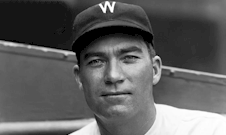
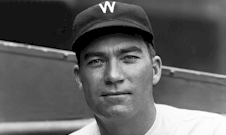
Frederick "Firpo" Marberry was a right-handed pitcher from 1923 to 1936, most notably with the Washington Senators. He was baseball's first prominent reliever, the first pitcher to have been retroactively credited with 20 saves in a season, the first to make 50 relief appearances in a season or 300 in a career, and the only pitcher to lead the major leagues in saves six times.
Before Marberry most relief pitchers were thought of as pitchers not good enough to be starters or simply ballplayers whose careers were almost washed up. Relief pitchers were supposed to eat innings to save the arms of starters who were having an extremely bad outing. It was usually assumed that if a reliever was in, that the ballgame was probably lost. Moreover, relief pitchers were rarely used in strategic situations of short durations (an inning or so) or to face certain batters. There was little emphasis on inserting a reliever in an outing that might eventually lead to a save.
Growing up on a farm near Mexia, Texas, Marberry apparently played little baseball as a youngster though in his late teens he found himself on various semipro teams in the area. He began as a shortstop and was not asked to pitch until 1920 when he was 21 years old. Soon thereafter while at Little Rock, Arkansas, Marberry was discovered by legendary scout Joe Engel. By that time Marberry had a growth spurt and was 6'2" which was considered tall for the era.
Marberry stomped around the mound, throwing and kicking dirt, glaring angrily at the batter. Marberry was known for the scowl he seemed to constantly have on his face which was a look that often-intimidated batters. He relied on no fancy stuff and and early in his career he threw only a fastball which batters often found deceptive due to his high leg kick. As Marberry developed as a pitcher, he did learn to throw a curveball and changeup.
Marberry attained the named "Firpo" as a sportswriter of the day likened his appearance to Luis Firpo, a professional boxer from Argentina with the tagline "The Wild Bull of the Pampas" who had knocked out Jack Dempsey in 1923. Marberry hated the nickname, but it stuck, and he could not rid himself of it from that point forward.
Marberry began his major league career with the Senators. When he first came up late in the 1923 season, he posted an impressive 4–0 record in over 40 innings of work. He followed that with an 11–12 season with a 3.09 ERA in 1924. Since "saves" were not even a category in baseball records of the time, he had to be credited with 15 saves many years after the fact when records were adjusted. Regardless, Marberry's role was crucial in helping the Senators reach the World Series that year, their first in franchise history.
Marberry became an important part of Washington's 1924 Series. In Game 2, after Senator's starter Tom Zachary had allowed the Giants to tie the game in the ninth inning, Marberry came onto the mound to strike out heavy-hitting Travis Jackson. The Senators then scored in the bottom of the inning, to tie the Series at one game. Strangely, Zachary was credited with the win, although modern rules would have given it instead to Marberry. In Game 4, Marberry took over in the 8th inning and held the lead for another Senator's win.
In Game 7 at Griffith Stadium, Marberry entered with two men on base and no one out in the 6th inning with the Senators in front 1-0. Although the Giants scored three times in the inning, two of the runs were unearned and Marberry put the stop to the Giants. In the 8th inning he was pulled for a pinch hitter. By the way, that was the only game that Hall of Fame pitcher Walter Johnson won and he did so also in relief as the Senators scored in the bottom of the 12th to take the World Series title. Marberry ended the Series with a 1.12 ERA in four games.
Marberry again saved 15 games in 1925 as the Senators won their second consecutive American League pennant. in the World Series, Marberry allowed no runs in two appearances, however the Pittsburgh Pirates won the title in seven games. Marberry had an excellent year in 1926, breaking his own record again with 22 saves and posting a 3.00 ERA, the lowest of his career. He also took over the major league record for career saves, with 52. In 1929 after two subpar performance seasons, Marberry came back to again lead the American League with 11 saves.
In 1930 and 1931, Marberry was utilized primarily as a starter, and amassed an overall record of 31–9 for the two seasons. In 1931, as both a starter (25 starts), and a reliever (20 appearances), he posted a splendid 16–4 record with a 3.45 ERA (5th in the league) and 88 strikeouts. He finished 13th to Lefty Grove in MVP voting.
In 1932, Marberry was traded to the Detroit Tigers where he had a respectable record and pitched until the spring of 1935. In 1936 Marberry accepted a tryout with the New York Giants. Believing that the problem causing his sore arm was his teeth, he had 14 abscessed teeth extracted. Nonetheless, he pitched in only one game for the Giants before being released. He then had a brief return to the Senators with Bucky Harris as manager, pitching in five games, before leaving the major leagues for good.
Oddly, he was offered and accepted a job as an American League umpire, with no minor-league experience though he only lasted a short time. “It’s too lonely for me," he said. "I like to be around the players and have companionship.”
Marberry's lifetime record of 148–88 with a 3.63 ERA in 551 games (187 starts), accumulating 86 complete games and seven shutouts along with his claim to the title of baseball's first real reliever should allow him for Hall of Fame consideration. Regrettably he is rarely mentioned for the honor by a baseball veterans committee that is woefully incompetent and mostly politically motivated.