america's best baseball card game!
The Kidnapping of "Shufflin" Phil Douglas
Blog post description.
12/9/20256 min read
The Kidnapping of "Shufflin" Phil Douglas
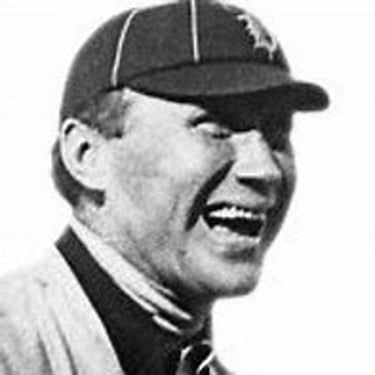
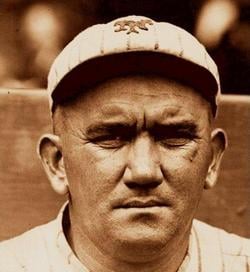
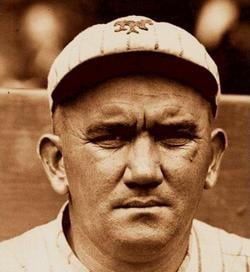
He was called "Shufflin" Phil Douglas because of the slow pronounced gait he used walking to and from the pitcher's mound. But the nickname could have been easily applied to his baseball career in general as he "shuffled" around the National League from 1912-1922 playing on four different teams. A serious problem with alcoholism lead to numerous suspensions and ultimately curtailed a career that could have been of Hall of Fame caliber as his stuff was that good. His 94-93 career record speaks of someone who was an average pitcher, but the record doesn't tell the whole story.
Douglas stood at 6"3" with a fastball impressive enough to give mention as a passing comparison to Walter Johnson. Eventually Douglas would command four pitches in his repertoire—spitball, curve, fastball, and change-up—though he relied mostly on a devastating spitter that would often drop over a foot in proximity to home plate and made batters look silly. Douglas had learned the pitch from Hall of Famer Ed Walsh in 1912.
But alcoholism and a tendency to disappear from his teams for days at a time mostly to drink and go fishing (his other passion) resulted in multiple fines and an eager willingness by his employers to ship him off to whomever was willing to put up with his behavior. Frankly, his pitching talents though stellar weren't worth the effort of dealing with someone who was frequently incapacitated, undependable and unstable.
In 1916 while on the Chicago Cubs, Douglas got into immediate problems in spring training with manager Joe Tinker, who suspended him before the season even started. Tinker an authoritarian had smelled liquor on Douglas at the team’s hotel in Tampa, Florida. Douglas asserted that the odor was actually garlic from a Spanish restaurant he’d recently frequented. “Honest, Joe, I haven’t had a drop for three months,” Douglas said. “That garlic that you get in these Spanish dumps certainly sticks to a fellow.” Tinker wasn't amused with the story and kicked Douglas off the team stating to reporters that he would never pitch for the Cubs again.
But Douglas was back on the Cubs the next year as after a disappointing season Tinker had been replaced by Fred Mitchell. Consistent with his talent, Douglas tossed a four-hit shutout in a 2-0 victory over Pittsburgh in his first start, then scattered nine hits in a 9-2 complete-game victory over the Cardinals on April 18. Sporting Life predicted that Douglas would be Mitchell’s “principal winner,” but only if he saw the “error of his ways” and “concentrated on baseball.” Though fellow Cub, Hippo Vaughn actually won 23 games to Douglas’s 14—he posted a very good 2.55 ERA and finished among the top ten NL pitchers in eight categories.
For the most part, Douglas stayed out of trouble that year. He did suffer an injury to his pitching hand in July when it got caught in an electric fan while he was stretching his arm in a subway car, presumably under the effects of alcohol.
In 1919, Douglas was signed by the New York Giants where manager John McGraw had some luck in keeping Douglas' drinking under control. In 1920, Douglas had a 14–10 record and a 2.71 ERA. It is interesting to note that in 1920, Major League Baseball banned the spitball but allowed 17 pitchers, one of whom was Douglas, to continue to use the pitch for the rest of their careers. Thus, Douglas became an even greater commodity to have in the starting rotation.
However, Douglas soon went AWOL and disappeared, prompting McGraw to suspend him indefinitely for leaving the team without permission. A sportswriter for The NY Times wrote a gripping article in which he called Douglas' disappearance “mysterious.” He suggested that Douglas had really been drugged by an un-named ballplayer for the Cincinnati Reds who had put knock-out drops in a glass of lemonade that Douglas drank. It was a sensational claim designed to increase readership, but it found favor and believability with the New York sporting faithful.
The actual truth was that Douglas couldn’t stand McGraw and didn’t like New York. He had in fact slipped out to Chicago where he signed a contract to pitch for the Logan Squares, a semipro barnstorming team with a roster of celebrities such as George Halas and Babe Didrickson. But Douglas soon got bored of facing inferior almost laughable competition and asked for reinstatement to the Giants in January 1920. McGraw reluctantly took him back as the team certainly had a chance for the pennant especially if he could rejuvenate Douglas, though the Giants fell short in second place to Brooklyn.
In 1921, McGraw became so fed up with Douglas and his drinking that he hired a man named Shorty O’Brien to follow Douglas around and keep him out of bars. The pair drew stares everywhere they went—O’Brien was bald and stood only 5-feet-1 and Douglas towered over him. Unfortunately, for McGraw the duo hit it off and became friends. O'Brien selectively overlooked the drinking of Douglas and on most occasions often drank with him.
This prompted McGraw to switch gears and assign the stricter Giants' scout Jesse “The Crab” Burkett as the caretaker for Douglas. The chemistry between the two was unpleasant at best but Burkett did keep Douglas from the bottle until July 30, 1922, when Douglas somehow slipped away after a 7-0 loss to the Pirates in Pittsburgh. Shufflin Phil finally made it back to New York a few hours later after a long train ride ending up at a friend’s Upper West Side apartment,
Here the story takes a bizarre turn. While Douglas was sleeping it off, two detectives hired by McGraw and posing as representatives of Western Union gained entry to the apartment and found the drunk pitcher in bed. They accused Douglas of stealing a watch from a fan at the Polo Grounds. The fake detectives then took Douglas to the NY 135th Police Station where they were met by Burkett who easily bribed the desk sergeant on duty with a five-dollar bill. It was there that Douglas was blindfolded and taken to the West End Sanitarium, where he was held against his will for five days.
Douglas underwent a grueling detox process that included hot baths, stomach pumping and multiple injections of a sedative. Douglas rightfully later contended that he had in fact been kidnapped against his will. He also said that he was not allowed to communicate with anyone on the outside including his wife who suffered a near nervous breakdown after she received a tip that he had been killed in a bar fight.
Upon his release from the sanitarium, Douglas still confused by the sedatives in his system thought McGraw had in the least suspended him though probably had kicked him off the team. Disoriented and almost broke, he decided to write a letter to Leslie Mann, a former teammate and a ballplayer on the St. Louis Cardinals. The letter read:
Dear Leslie,
I want to leave here but I want some inducement. I don’t want this guy to win the pennant, and I feel if I stay here I will win it for him. You know how I can pitch and win. So you see the fellows, and if you want to, send a man over here with the goods and I will leave for home on next train. Send him to my house so nobody will know and send him at night. I am living at 145 Wadsworth Avenue, Apartment 1R. Nobody will ever know. I will go down to fishing camp and stay there. I am asking you this way so there cannot be any trouble to anyone. Call me up if you are sending a man. Wadsworth 3210, and if I am not there, just tell Mrs. Douglas. Do this right away. Let me know. Regards to all.
--Phil Douglas
Yes, Mann was a friend, albeit a strange one for Douglas. Mann was a conservative Christian who was on the board of the YMCA. He frequently talked to youngsters about the evils of drinking and cheating, which of course were two strikes against Douglas. Why Douglas thought Mann would help him orchestrate a nefarious endeavor is unclear if not nonsensical. One can only conclude it was because of clouded thinking due to the hospital drugs.
As he came to his senses, Douglas realized his mistake then frantically phoned Mann in Boston where the Cardinals were playing and asked him to destroy the letter when it arrived. Mann instead ultimately showed the letter to his manager Branch Rickey, who recommended that it be forwarded to MLB Commissioner Kenesaw Mountain Landis who subsequently banned Douglas from baseball. Such was the strange end to Shufflin Phil's career on the mound.