america's best baseball card game!
The Day The Phillies Stadium Collapsed
Blog post description.
12/9/20253 min read
The Day The Phillies Stadium Collapsed
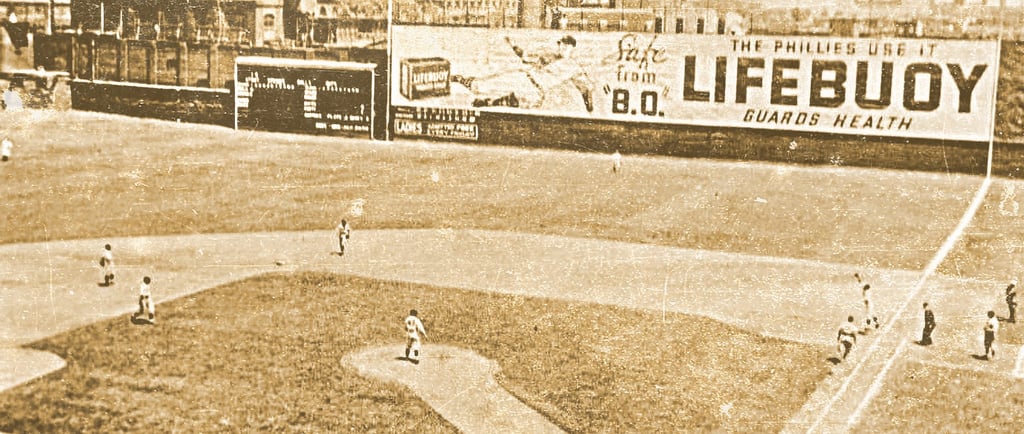
Philadelphia boasted a modern ballpark wonder in 1903. The Phillies stadium was built primarily of brick and steel. It was surely a safe environment for fans and an effective response to the tragedy still on people’s minds.
On August 6, 1894, the Phillies were practicing for an upcoming game against the Baltimore Orioles when a plume of blue smoke rose from the grandstand turrets. A fire engulfed wood timbers and spread rapidly until the whole stadium was destroyed. Fortunately, players were able to exit safely except for one who suffered minor burns when his uniform smoked with embers. The stadium had been constructed entirely of wood.
After the fire, Phillies co-owner and sporting goods businessman Alfred Reach, arranged to play at the University of Pennsylvania, whereupon some fans started calling the Phillies the Quakers.
Meanwhile, Reach hired an architect to design a fireproof ballpark. That’s why his new 18,800-capacity showpiece was constructed with inflammable brick and steel except for walking platforms, seats and bleachers. A new concept, cantilever steel horizontal beams, supported a portion of the upper deck, so fans at ground level could see without posts in their way. Officially called the Philadelphia Baseball Pavilion, fans dubbed it The Hump because it was located on a hill above Reading Railroad tracks.
On August 8, 1903, Philadelphia’s grandiose facility was host to a double header between the Phillies and the Boston Braves.
During the second game, a ruckus ensued outside the stadium over the left field wall down below on 15th Street. A group of kids were screaming for help. They had teased a drunk man who grabbed the hair of a 13-year-old girl named Maggie Berry. Fans turned their attention to the incident and a growing number raced to the top rail of the left-field bleachers.
A balcony protruded from the upper bleacher wall by three feet. It served as a walkway to pass from the grandstand to the bleachers. It was, unfortunately, one of the very few parts of the stadium constructed of wood. Over 300 fans crowded onto the wood balcony to witness the disturbance below. Jammed with an immense vibrating weight, the balcony tore itself loose from the exterior stadium wall and hurled people towards the street 30 feet below.
As one writer wrote: “…in the twinkling of an eye the street was piled four deep with bleeding, injured, shrieking humanity struggling amid the piling debris.”
Fans remaining in the leftfield bleachers jumped onto the field fearing a second collapse. Players fended off agitated fans with bats. The game was cancelled.
In all, 12 fans died and 232 were injured. It was the deadliest disaster ever associated with Major League Baseball.
After victims were transported by street cars to local hospitals, ballpark employees were directed to remove debris and clear the site. They carted off most of the timbers before an investigation could begin. Was the balcony wood really premium yellow pine or was it actually weaker hemlock?
The Phillies Business Manager stated that the accident was regrettable, but the stands were in perfect condition and no structure could have withstood the rush of several hundred to a concentrated point. Six years of legal battles culminated in a Supreme Court decision in favor of the defendant Phillies baseball club.
For the remainder of the 1903 season, Reach wanted to rope off the left field bleachers and continue in The Hump but the city insisted the Phillies share Columbia Park with the Athletics.
The Athletics, of course, were devasted by the disaster, too. So, on April 12, 1909, they erected a totally steel and concrete palace that would set the tone for today’s state-of-the-art stadiums. The Athletics owner, another sporting goods businessman named Ben Shibe, realized that crowd safety in Shibe Park required something more protective than wood. That was a critical lesson learned from a horrible day in Philadelphia in 1903 that baseball will never forget.