america's best baseball card game!
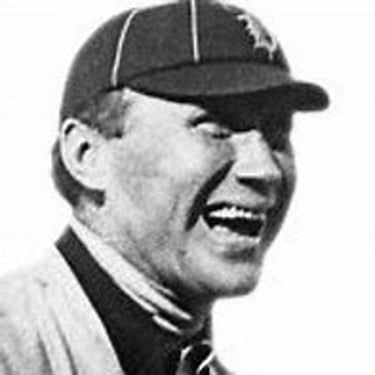
Robert Ripley, Baseball Player -- Believe It Or Not!
Blog post description.
12/11/20252 min read
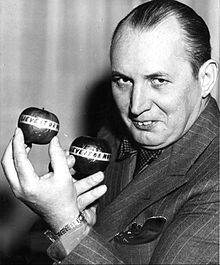
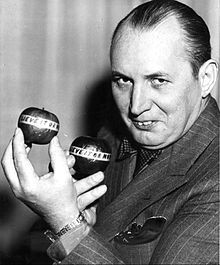
Robert Ripley, Baseball Player -- Believe It Or Not!
LeRoy Robert Ripley was an American cartoonist, entrepreneur, and amateur anthropologist, who from 1918 to the 1940s created then expanded the Ripley's Believe It or Not! syndicated newspaper comic panel which ultimately led to everything from comic books to radio and television shows. He even constructed museums called “Odditoriums” which featured strange artifacts from around the world. His legacy lives on today through the franchised use of his name and trademarks.
It is almost a Believe It or Not story of its own that Ripley has some relevance to the game of baseball. In 1910 after meeting famed author Jack London while working at the San Francisco Chronicle, both men traveled together to Reno, Nevada, to report on the “Battle of the Century” between boxers Jim Jeffries and Jack Johnson. Ripley did a few drawings of the event which impressed London enough that he gave Ripley a personal reference and a job lead eventually resulting in employment with the New York Globe newspaper.
OK, here’s where the baseball theme comes in. Ripley played semi-pro baseball in California and he seemed to love the game. By chance, The Globe asked him to cover the 1914 spring training of the New York Giants. After a few brags to one of the Giants’ coaches, Ripley took the mound. Supposedly, he had a wicked curveball but the tryout only lasted a few minutes before a line drive found its mark on his hand breaking a finger.
Years later Ripley said that he had in fact played in the major leagues for a month with the Giants then eventually reduced the claim to one game. However, a quick search of Baseball-Reference.com shows no attributable statistics though weirdly there is indeed an entry for a Robert Ripley but it is void of any dates or statistics. Regardless, what seems to be true is that the injury ruined Ripley for baseball and intensified his desire to become a cartoonist.
Ripley had a knack for coming up with memorable content. He sketched men with horns on their shoulders, an arm less golfer, two-headed goats and tattooed women. He liked to debunk history like when he documented that 66 men had flown across the Atlantic before Charles Lindbergh (most in hot air balloons) or that George Washington wasn’t the first U.S. President (14 men had been President of America’s Continental Congress).
In 1923, he hired an eccentric researcher named Norbett Pearlroth who would provide most of the bizarre stories for the Ripley cartoons for the next several decades. It is said that Pearlroth mostly lived inside the New York Public Library burying himself in research books.
Throughout the 1920s, Ripley’s popularity increased substantially and so did his income which rose to over $500,000 a year even during the Great Depression. He also devoted himself to handball and became the New York state champion in 1926. By this point, Ripley was constantly traveling around the world collecting items and researching material to draw.
For whatever reason and especially after the onset of World War II, Ripley decided to settle down and curtail the constant traveling. He bought an entire island with a palatial English style inspired castle just north of New York City near the town of Mamaroneck. It was so isolated that to get there one had to first traverse by boat then navigate through a dense pine tree forest, over slippery rock outcroppings followed by a swampy marsh. His goal was to turn the castle into his own personal odditorium.
In 1949, Ripley dropped dead on the set of an NBC TV show in a skit that strangely highlighted the military funeral song “taps.” Believe It or Not!