america's best baseball card game!
Lou Gehrig: The Lost Memoir
Blog post description.
12/9/20252 min read
Lou Gehrig: The Lost Memoir
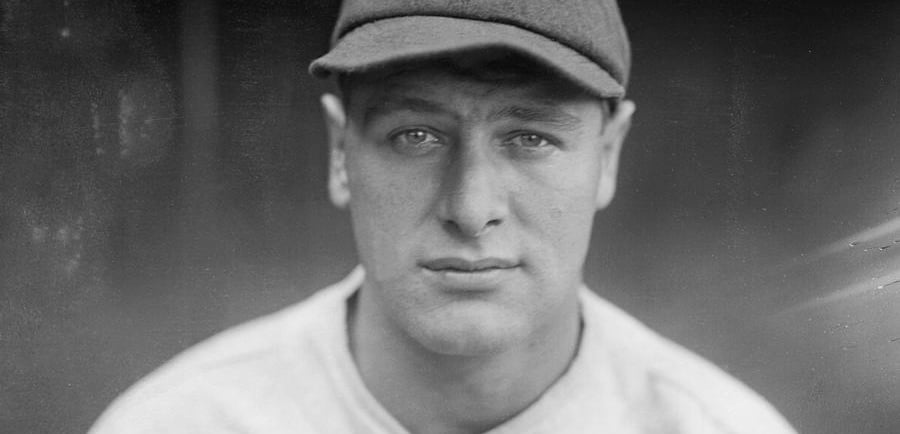
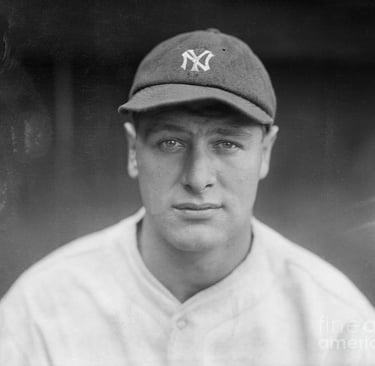
I recently ran across a wonderful hardcover book authored by Alan D. Gaff entitled “Lou Gehrig: The Lost Memoir.” Gaff is an historian by trade and it was not his intent to delve into the life of Gehrig or even baseball. He was researching events on the aftermath of World War I and he was looking through microfiche of Oakland, California newspapers.
That’s where he first stumbled across one of several articles written by Lou Gehrig. Evidently Gehrig’s agent Christy Walsh arranged for his young client to write a series of newspaper columns which appeared throughout 1927!
1927 as we all know was an incredibly special year for baseball and the Yankees in particular as they won an amazing 110 games finishing 19 games ahead of the Philadelphia Athletics. The Yankees then topped it off by sweeping the Pittsburgh Pirates in the World Series. This Yankees team was known for its feared lineup, which was nicknamed “Murderers’ Row” and is widely considered to be the greatest baseball team in MLB history.
But back to Lou Gehrig. It turns out that he did indeed write a series of newspaper columns that ran only in the cities of Oakland, Pittsburgh and Ottawa, Canada, during the 1927 baseball season.
Gaff was puzzled as he had never run across any reference to the columns. He subsequently searched the internet and found nothing, absolutely no mention of Lou Gehrig’s foray into journalism. Seeing an opportunity and a sense for an untold story, Gaff dug further and uncovered a unique first-hand account by one of baseball’s greats.
Gaff learned that the sports agent, Walsh, wanted Gehrig to tell a rags-to-riches tale that would appeal to the common reader. Thus, in one of the first columns, Gehrig wrote about his loving mother, Christina. It is interesting to note that there was no mention of his father, Heinrich, who could not hold a job as he suffered from alcoholism and epilepsy.
Gehrig recanted on how he got into baseball while studying at Columbia University. It seems that when the Yankees offered Lou a bonus of $1,500 it was too hard to pass up as there were medical bills because his mother was sick with pneumonia. The decision to delay his education and play baseball fulltime was an easy one considering the circumstances.
Gehrig then talks about his struggles in his first two years (1923-1924) when he played sparingly and underperformed defensively. He mentions a taunting from Hall of Famer Ty Cobb who once quipped to Gehrig, “…if you are a ballplayer than I am the King of Siam.” However, the two would ultimately become good friends and often laughed about the comment.
Of course, there were stories about the Babe. Gehrig claims the Bambino offered him financial advice and told him to invest his money instead of throwing it away as he often did. Gehrig also discounts any hard feelings between the two players especially when both were going for the home run crown that season.
There are other articles about the baseball stars of the era such as Tris Speaker and Walter Johnson. As he talks about these individuals including his Yankee teammates it appears as if Gehrig is awestruck by their greatness. In the least he modestly downplays his own talent by calling himself “…just a cog in the wheel of a great team.”
I highly recommend Gaff’s book, read it and enjoy!