america's best baseball card game!
Kiki Cuyler -- Debunking The Superstition Myth
Blog post description.
12/11/20252 min read
Kiki Cuyler -- Debunking The Superstition Myth
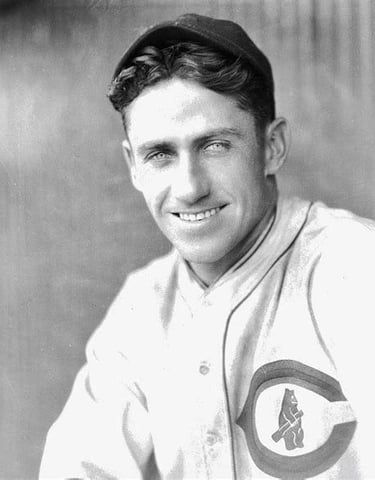
Kiki Cuyler played for the Pittsburgh Pirates, Chicago Cubs, Cincinnati Reds and Brooklyn Dodgers from 1921 until 1938. He led the National League in stolen bases four times, runs scored two times and had a batting average of at least .350 on four occasions. His 26 triples in 1925 were the second most triples in any season after 1900. He compiled over 200 hits in three separate seasons and was one of the main reasons that the Pirates won the 1925 World Series. A career .321 hitter, he was elected to the Baseball Hall of Fame in 1968.
Kiki's real name was Hazen Shirley Cuyler. He had a slight stuttering problem and when he said his last name most people thought it sounded like "key-key," instead of "kooler" hence the knickname.
After finishing high school, Cuyler enlisted in the U.S. Army and served in Company A of the 48th Infantry Regiment, but was not sent to France during World War I. Afterwards, Cuyler was one of the few if any other ballplayers to ever attend the U.S. Military Academy at West Point though he soon found that an Army career wasn't for him and he dropped out honorably discharged.
He then returned to Michigan, the state of his birth, and married his high-school sweetheart, Bertha M. Kelly, in 1919. To support the family Kuyler found a job at a Buick car assembly plant in Flint. He also played on the company's semi-pro baseball team as a hard-throwing pitcher though after receiving a Major League contract he immediately transitioned to playing right field.
In 1927, Pittsburgh Pirates manager Donnie Bush wanted Cuyler to move from third to second in the batting order. Cuyler refused. It is a commonly accepted myth promoted by most baseball historians and SABR-ites that Cuyler objected out of superstition. However, the reality is that it had nothing to do with superstition. In fact, Cuyler was one of the few baseball players of the era who had no such allegorical beliefs. His only outward sign of considering anything of a deeper more mystical matter in baseball was when he made the sign of the cross entering the dugout.
When asked about his refusal to switch in the batting order by a sports reporter from the Pittsburgh Post-Gazette, Cuyler never said that such a move was "unlucky." Instead, he stated that he felt more comfortable in the third spot because he could best read the opposing pitcher by having a better opportunity to study his pitch repertoire.
Needless to say, the superstition tag has since stuck and is the accepted though erroneous reason to explain Cuyler's declination. Regardless, it is clear that Cuyler's refusal did not sit well with Bush who prided himself on his authoritarian management style. In addition, Bush was still holding a grudge with Cuyler over the latter's failure to slide harder in order to break up a double play on August 6th for which he was fined $50.
Cuyler's disobedience which embarassed the hot-headed Bush in the press and the League came to a head when Bush suspended Cuyler right before the Pirates began the 1927 World Series. Bush wanted to make sure that Cuyler would not be eligible for any extra monetary compensation for participating in the Series. Without Cuyler, the Pirates only batted .223 as a team and were easily routed by the Yankees in four games. Cuyler was dealt soon thereafter to the Cubs in November for outfielder Pete Scott and infielder Sparky Adams which is generally recognized as one of the worst trades ever.