america's best baseball card game!
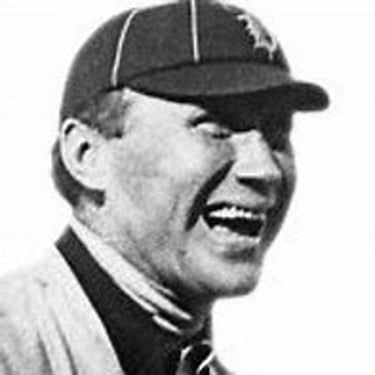
Jake Daubert: Troublemakers Don't Get Into The Hall Of Fame
Blog post description.
12/11/20253 min read
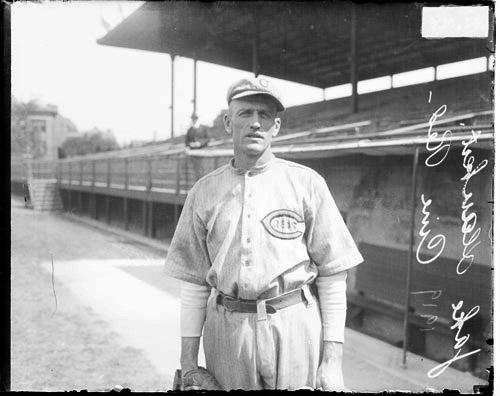
Jake Daubert: Troublemakers Don't Get Into The Hall Of Fame
Jacob Daubert known more commonly as “Jake” Daubert played for Brooklyn and Cincinnati from 1910-1924. During his major league career, Daubert compiled an impressive .303 lifetime batting average. At the time of his premature death in 1924, he ranked among the major league career leaders in games (4th, 2,001), putouts (4th, 19,634), assists (5th, 1,128), total chances (4th, 20,943) and double plays (3rd, 1,199) at first base; he was also among the NL's leaders in hits (7th, 2,326), triples (9th, 165), at bats (9th, 7,673), games played (10th, 2,014) and total bases (10th, 3,074). Daubert currently holds the NL record for most sacrifice hits (392).
Other accomplishments for Daubert include winning the 1913 (.350) and 1914 (.329) National League batting titles and the 1913 Chalmers Award as the National League's Most Valuable Player. Between 1911 and 1919, The Baseball Magazine named him to their All-American team seven times. A stellar first baseman, he never fielded below the .989 mark. This is important considering the number of bunts in those days and the many chances that a first baseman might have involving such plays.
But, as we know folks, statistics are often of little use when it comes to the higher-ups that control baseball. Daubert had been branded a “troublemaker” because of his efforts to challenge baseball’s legal status (later to be known as the reserve clause) and to organize players into a union. Evidently, that has been enough to keep him out of the Hall of Fame when far less deserving players have been enshrined.
Daubert first ran into problems in 1913 when he circulated a players’ petition that called for: 1) permission for players to negotiate with any team following their unconditional release, 2) a guarantee that clubs would provide players with 10 days' notice before releasing them unconditionally, 3) a guarantee that clubs would inform players of the terms of their contract when they are sent to another team, 4) a guarantee that a veteran players would not be sent to the minor leagues when his services are of interest to another major league club, 5) a guarantee that clubs would furnish uniforms and shoes to players free of charge, 6) a guarantee that clubs would provide traveling expenses to players between their homes and spring training camps, and 7) that players should receive written notice concerning any fine or suspension levied against them.
Frankly, this was the first time I've ever heard that players had to pay for their own uniforms. Although, considering baseball owners of the era I imagine this was the case.
In 1918 owners released players early and pro-rated contracts as there was an abbreviated season due to World War I. Daubert sued the Dodger’s Charles Ebbets claiming he was under a multi-year contract and was owed the money. The case was settled out of court in Daubert’s favor, but he was immediately dealt to the Cincinnati Reds. Daubert became the Captain of the Reds and was instrumental in the team achieving their first World Championship later that year against the White Sox (Black Sox).
Though a steady lineup starter, Daubert suffered a variety of injuries that affected his play. He had been beaned at least eight times in his career which often caused headaches, sleeplessness and in the worst of times double-sighted vision. In 1924, he began to suffer from what doctors’ thought was appendicitis and gallstones. On October 2 he was operated on by the team doctor, Dr. Harry Hines who made a wrong diagnosis. Not surprisingly Daubert died after several botched blood transfusions. It was later determined that he had a hereditary spleen disease and blood disorder known as hemolytic spherocytosis, the same condition later afflicted his son. A review of his medical case some years after his death concluded that with proper treatment, Daubert should have lived.
A popular player who was not known as a troublemaker by his peers, Daubert’s funeral was attended by many major league stars including Cincinnati teammates Rube Bressler, Edd Roush and Eppa Rixey. Ironically, Carl Mays who had thrown the infamous beanball that killed Ray Chapman of the Cleveland Indians was one of the pallbearers.