america's best baseball card game!
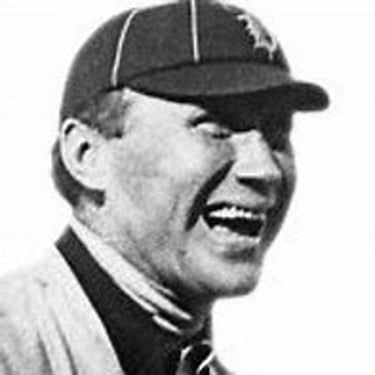
He Was No "Dummy" Hoy
Blog post description.
12/11/20253 min read
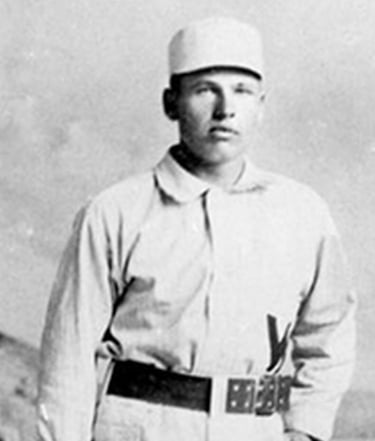
He Was No "Dummy" Hoy
William Ellsworth "Dummy" Hoy played for several major league baseball teams from 1888 to 1902, most notably the Cincinnati Reds and two Washington, D.C. franchises. Born with normal hearing, Hoy became deaf after suffering meningitis at age three. The illness probably also stunted his growth as his mature height was a smallish 5’4”. He could speak somewhat but the sound emitted was a high-pitched squeak and difficult to understand.
Today using the word "dummy" to describe someone who cannot speak is offensive and rightly so, however in his day this was a common though still inappropriate term for the deaf. It should be said that Hoy himself was not bothered by the “dummy” reference and in fact, he embraced it by always using it as his first name in public situations.
Hoy was incredibly intelligent and he graduated from the Ohio State School for the Deaf in Columbus as class valedictorian. He is sometimes credited with developing hand signals used by umpires and first and third bases coaches. While this is in dispute and probably not accurate, he did help refine the use of such signals and he engaged a variety of sophisticated ones to communicate with fellow team members on the playing field. He also whistled frequently to alert others of his positioning in the outfield, to avoid collisions and to defend against certain batters. Hoy even inspired a sort of sign language with the hometown Cincinnati fans as when he made a good catch or got a hit, they would stand and raise their arms in a sign-language salute.
In his rookie year with the Washington Nationals he led the league in stolen bases and finished second with 69 walks while batting a respectable .274. Because of his short stature, left-handed batting stance and minuscule strike zone, he was able to gain numerous walks leading the league twice and compiling a .386 career on-base percentage.
Hoy possessed incredible speed and he used it to great advantage in the outfield by playing shallow. He also had a very powerful throwing arm. On June 19, 1889, he set an MLB record at the time by throwing out three runners at home plate in one game. It is interesting to note that Connie Mack was the catcher who received Hoy’s throws.
Hoy became the third deaf player in the major leagues, after pitchers Ed Dundon and Tom Lynch. Curiously, in May of 1902, Hoy batted against pitcher Dummy Taylor of the New York Giants which was the first faceoff between deaf players in the Major Leagues. When Hoy came to home plate for the first time, he greeted Taylor by hand signing, “I’m glad to see you!” and then cracked a single to center followed by another three innings later.
In 1901, playing for the Chicago White Sox, Hoy hit a grand-slam homerun which has been credited to be the first ever in the American League.
The case for Hoy to be enshrined in the Baseball Hall of Fame is totally justified. He held the MLB record for games in center field (1,726) from 1889 to 1902, set records for career putouts (3,958) and total chances (4,625) as an outfielder, and retired among the leaders in outfield games (2nd; 1,795), assists (7th; 273), and double plays (3rd; 72). He was also an excellent base runner, scoring over 100 runs nine times. Hoy's career statistics tell of a .288 batting average, 2048 hits, 1429 runs, 725 RBIs, 248 doubles, 121 triples and 40 homeruns. He had 596 stolen bases. A concerted effort dedicated to his possible HOF enshrinement can be found at https://dummyhoy.com
After retiring from baseball, Hoy worked as an executive with Goodyear. He directly supervised a large crew of highly skilled male deaf workers who were medically ineligible for service in World War I though their efforts on the home front proved to be invaluable to the war effort.
Two months before his death at age 99, Hoy threw out the first pitch of Game 3 of the 1961 World Series in Cincinnati where he played most of his career. In 2001 the baseball field at Gallaudet University in Washington, D.C. (only university in the world where students live and learn using American sign language) was named the William "Dummy" Hoy Baseball Field. In 2008, the Documentary Channel aired the biography Dummy Hoy: A Deaf Hero (aka: I See the Crowd Roar). The documentary, narrated by Roy Firestone used photographs of Hoy along with actors recreating certain key events in his life.