america's best baseball card game!
Clothes Make The Man
Blog post description.
12/11/20252 min read
Clothes Make The Man
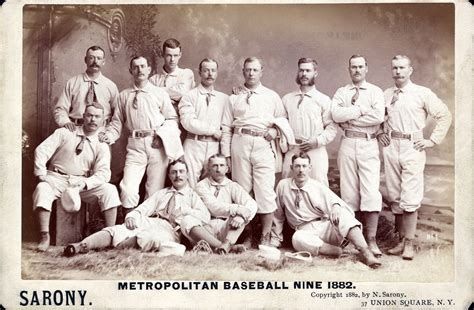
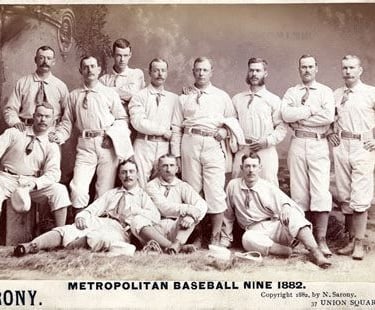
In 1845, the New York Knickerbockers became the first organized baseball club. However, baseball players had no official team uniforms until 1849. The first uniforms were composed of 100% wool pantaloons, with a white flannel shirt, topped with a straw hat.
All uniforms were navy blue in color which was the color of choice for popular fraternal clubs of the time. Cotton uniforms were discouraged as it was considered to be a material worn by those of low economic status.
1860: The Brooklyn Excelsiors wore the first baseball caps as part of their uniform. The team played on an amateur level, but went on to eventually become the Brooklyn Robins then Brooklyn Dodgers.
1862: Paul Butler is credited as being the first baseball player to use spikes on his playing shoes though the cleats were detachable and not fixed. Similar plates were introduced in the 1870s by Spalding Sporting Goods though Waldo Claflin was the first manufacturer to sell leather shoes specifically marketed as baseball shoes that had built-in fixed steel cleats.
1868: The Cincinnati Red Stockings were the first team to wear knee-high knickers. The uniforms highlighted their red stockings for which the team was named.
1906: The New York Giants were the first team to sport a collarless jersey. Strangely, most other teams did not adapt this style until the year 1915.
1916: Due to complaints from fans and scorekeepers who were often confused as to which players were on the field, the Cleveland Indians were the first big league club to have numbered athletic uniforms. The experiment, however, lasted only a few weeks before the team dropped jersey numbers. It was not until 1929 when both the Indians and the New York Yankees took to wearing jersey numbers. By 1932, every major league team had numbered baseball team uniforms.
1939: The New York Yankees became the first baseball team to retire a jersey number when they honored Lou Gehrig's number 4 after he was stricken with ALS.
1960: A player's last name was not on the backs of uniforms until the 1960 season when the Chicago White Sox made names mandatory.