america's best baseball card game!
Austin McHenry: A Baseball Career Cut Too Short
Blog post description.
12/9/20252 min read
Austin McHenry: A Baseball Career Cut Too Short
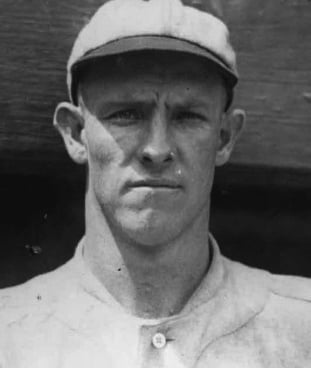
A newspaper man of the era described Austin McHenry as “…having an arm of steel and the gait of a deer.” His stride chasing down a fly ball or a line drive in the outfield was so graceful and effortless that people often assumed he was loafing. He was that kind of special.
McHenry first came up to the St. Louis Cardinals mid-way through the 1918 season positioned occasionally in left field for the then last-place team. He hit an OK-ish .261 with a homer and 29 RBIs in 272 at-bats.
But Cardinals manager Branch Rickey could easily see the potential in McHenry and he told his coaching staff to work with the young player. The next year, McHenry began the season on the bench as the team’s fourth outfielder behind regulars Cliff Heathcote, Burt Shotton, and Jack Smith. He saw game time mostly as a pinch-hitter and runner. However, he soon gained insertion into the lineup when Shotton suffered an injury.
This was the break McHenry needed to showcase his improving talents in the field and at the plate. Not only did McHenry lead the team with a .985 fielding percentage but he batted .286 with 11 triples. The improvement continued in 1920 when McHenry batted .282 with a team-leading 10 home runs and 65 RBIs. His home run tally was only behind National Leaguers’ Cy Williams, “Irish” Meusel, and George “Highpockets” Kelly.
The following year, McHenry hit a career-high 17 home runs to go along with an amazing .350 batting average and 102 runs batted in. He also recorded his first 200-hit season (201), and set career highs in runs (92), doubles (37), steals (10), walks (38), on-base percentage (.393), and slugging (.531). The batting average was especially gratifying for McHenry because it was second best in the league behind fellow Cardinal and future Hall of Famer, Rogers Hornsby. Not surprisingly, the Cardinals team was improving as well as they finished in third place with an 87-66 record.
It seemed that McHenry was poised for greatness with a career that could only get better. Although, 1922 started off close to where his 1921 season had ended in a fast and productive pace, McHenry soon began to cool off at the plate. What was even more troubling was the fact that by June he had begun to have problems in the field. It seemed that catching fly balls were difficult due to constant dizziness and vision problems.
McHenry confessed to Branch Rickey that he thought he was going blind. The health situation digressed so rapidly that McHenry was sent home to Ohio for rest. After extensive medical tests it was determined that the outfielder had a brain tumor. McHenry told friends that he believed the tumor was the result of a beaning that he suffered in 1916 while on Portsmouth of the Class D Ohio League.
McHenry was admitted to Good Samaritan Hospital in Cincinnati where doctors performed a risky operation to remove the tumor which failed. Three weeks later McHenry passed—a career cut short much too soon. We can only wonder what McHenry’s stats would have been had he remained healthy. Even in his short time with the Cardinals, he demonstrated that he was a rising star whose future seemed almost limitless.