america's best baseball card game!
Art Shires: Baseball's Biggest Showboat
Blog post description.
12/9/20253 min read
Art Shires: Baseball's Biggest Showboat
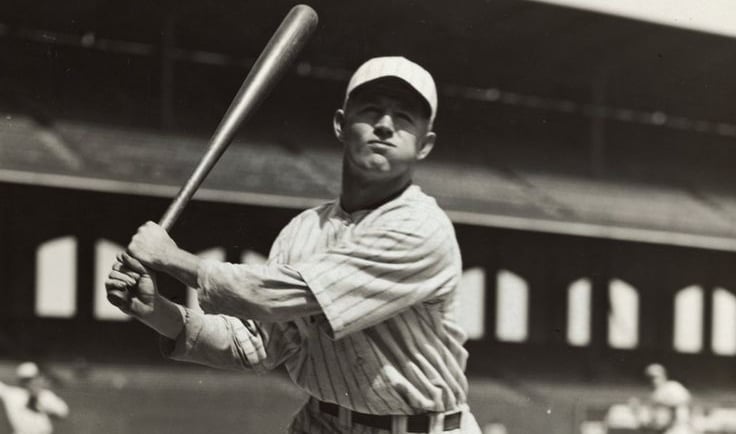
The term “showboat” in sports refers to an individual who wants their ostentatious behavior to be seen at all costs. Many can back their over-extended ego up with demonstrated results and records as was the case with “Broadway” Joe Namath, Magic Johnson or Reggie Jackson. Yet, there is a group of other individuals who claim greatness yet fall far short of that mark. In many instances their off-the-field antics designed for publicity and personal gain become more memorable than their actual sporting accomplishments. Such was the case with Art Shires.
In a scant four seasons primarily with the White Sox, the first baseman showed considerable promise by batting a combined .291. He hit .349, .312, and .302 in his first three seasons though his 1932 season turned out to be mostly injury-ridden especially with serious knee problems.
It all started out on a high point for Shires as he got four hits in his first game, one of which was a long triple, off future Hall of Famer Red Ruffing. After the game, Shires boasted that the American League “…was a piece of cake and he would likely hit .400.” But this type of talk was commonplace for Shires who often referred to himself as “Art The Great.” He once bragged that he was the biggest draw next to Babe Ruth.
Shires’ life seems like a modern-day cable television reality show gone wrong. Even before Shires got to the majors, his career almost imploded. While on a Waco, Texas team, Shires responded to taunts from the opposing Shreveport, Louisiana fans by throwing a baseball into the crowd. The ball hit Walter Lawson, a black man, in the back of head and he languished mostly unconscious for seven months before dying. Lawson’s wife Ida sued for $25,411 but the case was thrown out by an all-white jury.
Shires evidently loved the good life and he had a passion for being the most well-dressed person in the room. He reportedly had a closet full of the finest suits, hats, tuxedos and specialized outfits for polo, yachting and golf. He once took batting practice wearing a red felt hat which so inflamed manager Lena Blackburne that a fist fight ensued. When Shires was traded to the Washington Senators, he entered the clubhouse wearing a green sports coat with pearl buttons and white trousers with stripes. Needless to say, this did little to impress his new teammates.
Perhaps, the prior fight with Blackburne gave Shires the confidence to enter boxing as a side hustle. In the winter of 1929, Shires knocked out “Dangerous Dan” Daly in 21 seconds before a crowd estimated at 10,000 in Chicago’s White City Amusement Park.
This victory evidently earned Shires a follow-up match against George Trafton who was the center for the Chicago Bears football team. Trafton beat Shires after five rounds and three knockdowns, however, sportswriters dubbed the fight the “Battle of the Clowns.” Even the defeat did not stop Shires who demanded a match against Cubs center fielder Hack Wilson though MLB Commissioner Landis soon put a stop to it all after it was learned that the first fight probably had been fixed.
In October 1930, Shires was part of an American League All-Star team that included future Hall of Famers Harry Heilmann and Charlie Gehringer. The squad played the Negro League’s Chicago Giants losing three of four games. The following year he was a on the roster of another All-Star squad in Los Angeles with Lefty Grove and Bing Miller. While in Hollywood, Shires got some additional ideas for self-promotion such as trying to score $1,000 by arranging his own wedding on film. The deal never materialized but Shires was ultimately cast by Universal Studios with actor Kane Richmond (primarily known as Lamont Cranston in the Shadow serials) in two episodes of the “Leather Pushers" which was about (what else) boxing.
As Shires’ injuries mounted, he ultimately fell down to minor league baseball landing in Milwaukee. Soon thereafter, Shires went back to boxing. He fought a Sid Hunter in January of 1935 who knocked him out with a blast to the chin. Two weeks later Shires had a winning result against a stiff named Joe Daley. This fight became Shires’ last and his total record came to a respectable 5-2 with five knockouts.
Shires also fancied his voice and became a cabaret singer by night which supplemented his new daytime activities of wrestling, wrestling referee and a softball player on a team of boxers, one of whom was evidently named “Man Mountain” Dean.
From that point, Shires seemingly fell out of the sports page until December 8, 1948, when he was charged with the murder of Hi Erwin, an ex-baseball player. Though friends for over 25 years, the two men got into a drunken fight. However, Shires once again lucked out as his lawyer found a doctor who testified that the victim had contributing cirrhosis of the liver as well as pneumonia. Shires received only an aggravated assault charge. Shires soon slipped back into obscurity and he died in 1967.