america's best baseball card game!
Addie Joss: Typewriter On The Mound
Blog post description.
12/11/20253 min read
Addie Joss: Typewriter On The Mound
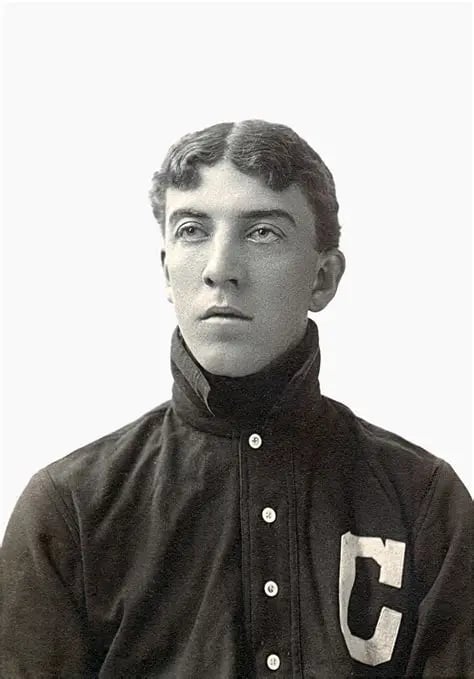
Addie Joss was nicknamed the “Human Hairpin” as he was a lanky 6’3” tall with extremely long arms and weighed only 185 pounds. He pitched from 1902-1910 for the Cleveland Bronchos (also known as the Bluebirds) later known as the Naps (1903) before the team became the Indians now the Guardians.
In his first major league start he one-hit the St. Louis Browns. By the way, that one hit was disputed as the home plate umpire Bob Caruthers said the ball was dropped by Cleveland’s right fielder Zaza Harvey while most including Harvey said the catch was “clean.” Regardless, in the time before instant replay, the ruling of the all-powerful umpire stood.
In that his rookie season, Joss compiled a 17-13 record, 2.77 ERA and lead the American League with five shutouts. After the season’s end, he was selected to barnstorm for the All-Americans, an all-star team from the American League that played exhibition games against their counterparts from the National League.
For the 1904 season, the 24-year-old Joss went 14–10 with a 1.59 ERA and did not give up a home run. Beginning in 1905, he had his first of four consecutive 20-win seasons. He had many other accomplishments on the mound such as when he pitched the second perfect game in modern baseball history (October 2, 1908 vs. the White Sox). His overall career earned run average was an amazing 1.89, the second lowest in MLB history behind Ed Walsh. Additionally, Joss pitched a second no-hitter, on April 20, 1910, against the same White Sox, becoming the first pitcher in MLB history to no-hit the same team twice.
In an era characterized mostly by spitball pitchers, Joss never threw the pitch. Instead, he relied on a fastball, changeup and sweeping curve. He threw with a corkscrew windup turning his back toward the batter seemingly until the moment the pitch was delivered.
Like most baseball players of his era, Joss had a job in the off-season to support his family, though unlike most ball players he was highly educated. Before baseball he attended the University of Wisconsin at Madison where he studied engineering. He also had a love of writing which led to his hiring by the Toledo News-Bee after the 1906 season. His columns were so popular that the newspaper had to install a special telephone line to answer the numerous calls from readers and fans. This position soon heralded an upgrade to sports staff writer for the much larger Cleveland Press.
His engineering acumen also came in quite handy. In 1908, Joss tinkered with and then perfected one of the first electric baseball scoreboards which was dubbed the “Joss Indicator.” The Naps paid Joss for the rights to install it in their ballpark.
Unfortunately, Joss seemed to constantly battle a variety of illnesses. In 1903, he contracted a high fever that disabled him the last month of the season. This was followed with a rare bout of malaria in 1904 and a back injury in 1905. In 1909, he struggled with mononucleosis. In April 1911, Joss became ill which quickly led to an untimely death from meningitis.
His career stats are 160 wins, 234 complete games, 45 shutouts and 920 strikeouts. Even though Joss only played nine seasons, he was declared eligible for the Baseball Hall of Fame and was elected by the Veterans Committee in 1977.
So beloved was Joss by his fellow baseball players that they arranged a memorial All-Star game on July 24, 1911. Players included Home Run Baker, Ty Cobb, Sam Crawford, Walter Johnson, Tris Speaker, Smoky Joe Wood and others. The All-Star Team played the Naps squad and beat them 5-3. The game was attended by over 15,000 fans and raised $13,000 for Joss’ widow which was over $350,000 in today’s money.